“A lot of people get into farming because they are passionate,” says Baylee Drown of Long Table Farm in Lyme, Connecticut, “you need to create a sustainable business in order to survive.”
Baylee and her husband, Ryan Quinn, “Quinn”, combine passion with strategy. After leasing a 4.6-acre parcel of farmland on Beaver Brook Road for a few years, they purchased it with a clear business plan in mind, one that relied on the land being conserved with an agricultural easement. “We could not have afforded the purchase of the farm without the easement,” Baylee explains. Buying the land at its agricultural value, rather than the development value, made ownership possible.
“We could not have afforded the purchase of the farm without the easement”
Baylee Drown, Long Table Farm
Conserved land has become a key tool for many young farmers. In Connecticut, where farmland is some of the most expensive in the country and infrequently comes up for sale, purchasing conserved land offers a rare opportunity.
Agricultural conservation easements—voluntary, long-term agreements that protect land for farming—help keep farmland in production and within reach for new farmers.
Conservation vision, farming innovation
Baylee and Quinn’s farming story begins with Deb and Rob Hornbake, who purchased the parcel in 2012 to create a wholesome food producing farm on a former hayfield. Motivated by a desire to preserve farmland to support young farmers, and provide healthy food for their community, the Hornbakes worked with Connecticut Farmland Trust (CFT) to conserve the land in 2017. They began leasing it to Baylee and Quinn in 2015, creating the path for Long Table Farm to take root.
With support from CFT and the generosity of our donors, the Hornbakes protected the land, with feedback and guidance on the easement from farmers Baylee and Quinn, ensuring the easement would work for a viable farm operation. Baylee and Quinn purchased the land at its agricultural value, rather than the development value, and are now growing food, building community, and stewarding the soil for the next generation.
Long Table Farm is a model of innovation and thoughtful land use.
Small parcels yield big impact
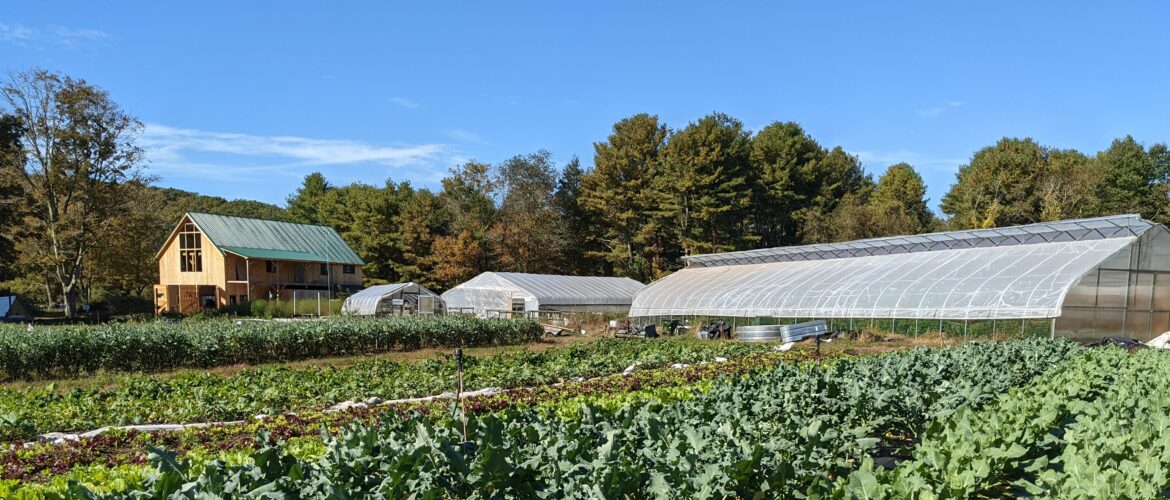
With just a few acres, Baylee and Quinn run a diversified business that includes farm market sales and a thriving Community Supported Agriculture (CSA) program. They also lease land from the nearby Lyme Land Trust to expand production. “With intensive, regenerative practices, you can produce an immense amount of food on very little acreage, while building biodiversity and soil health,” Baylee said.
The CSA program is a major success, in part because they know their customers. “You have to give people what they want and are familiar with,” said Baylee, “and also keep it interesting—no more than one weird thing a week.”
They’ve made the most of Connecticut’s unique geography—a blend of urban, suburban, and rural areas—which supports strong direct-to-consumer sales. “Other states don’t have this dynamic geography—farmers here can benefit from diverse soil types and a resilient landscape rich in flood-preventing swamps and bogs,” Baylee noted.
Innovation doesn’t stop at crop selection
Their innovation also extends to sustainable practices. “Our farming practices are regenerative for soils, making them better than when we arrived,” Baylee said. “Our livestock are a source of pest control and fertility. Our composting operations draw in the entire Lyme community, and all our practices help us eliminate the need for any synthetic chemicals. When your soil is healthy, your plants are healthy.”
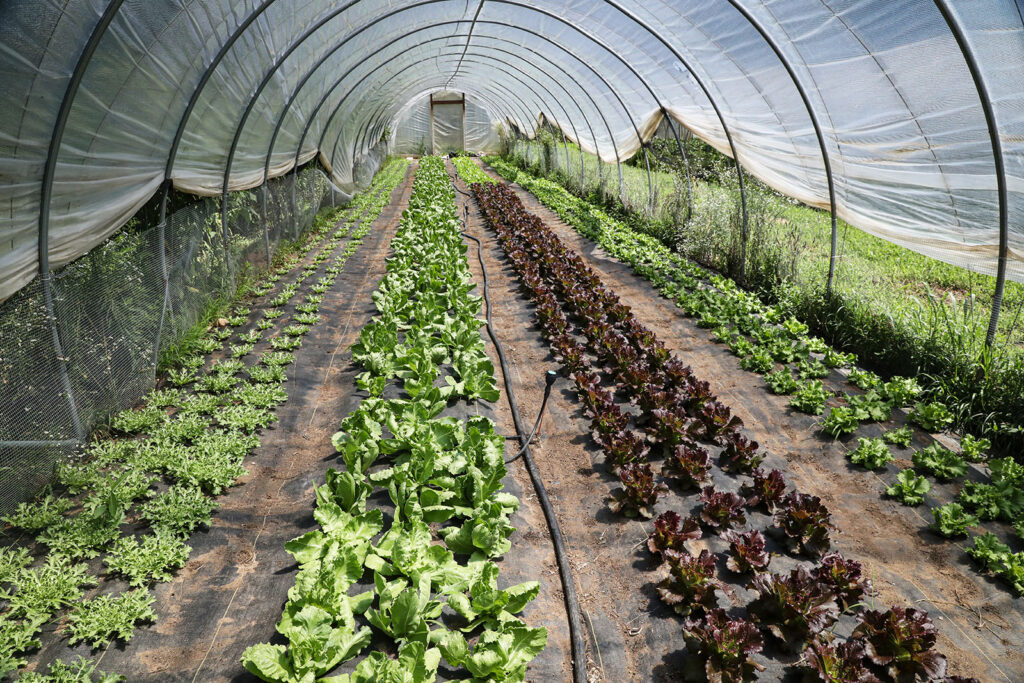
They’ve also tapped into solar energy, an imminent solar installation powering their farm and an electric truck. High tunnels extend the growing season by trapping warmth from the sun earlier and later in the year. “You have to get good quickly at the things you are already good at, and keep innovating,” Quinn said. “After all, you only get maybe three dozen tries at getting it right in your lifetime.”
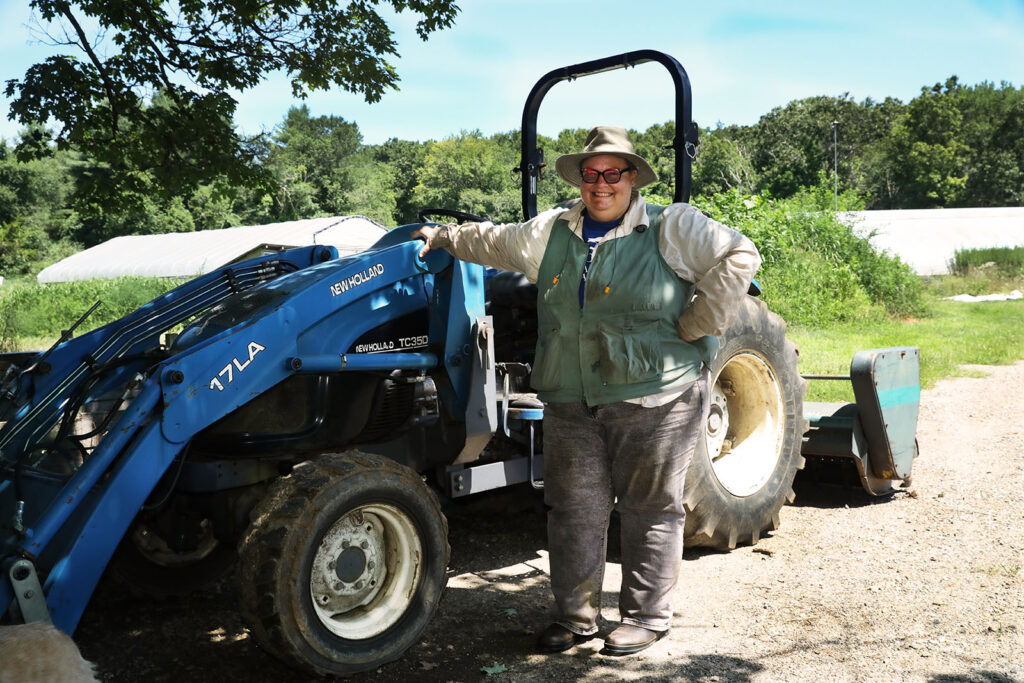
“You have to get good quickly at the things you are already good at, and keep innovating, after all, you only get maybe three dozen tries at getting it right in your lifetime.”
Ryan Quinn, Long Table Farm
Baylee and Quinn’s work prioritizes soil health, biodiversity, and climate resilience—all rooted in a deeper mission: to serve their community and care for the land. Conserved farmland gave them a viable path to ownership, and they’ve turned that opportunity into a thriving, forward-thinking farm.
Our challenge now is to increase the pace of conservation in Connecticut so that other farmers, throughout the state, can purchase and care for the land, for future generations.
On June 7, 2025, Baylee will lead a farm tour highlighting how she makes so much work on so little land. A $25 fee covers her time and snacks and drinks at the end of the tour. You won’t soon forget it, and space is limited. Sign up at THIS LINK.