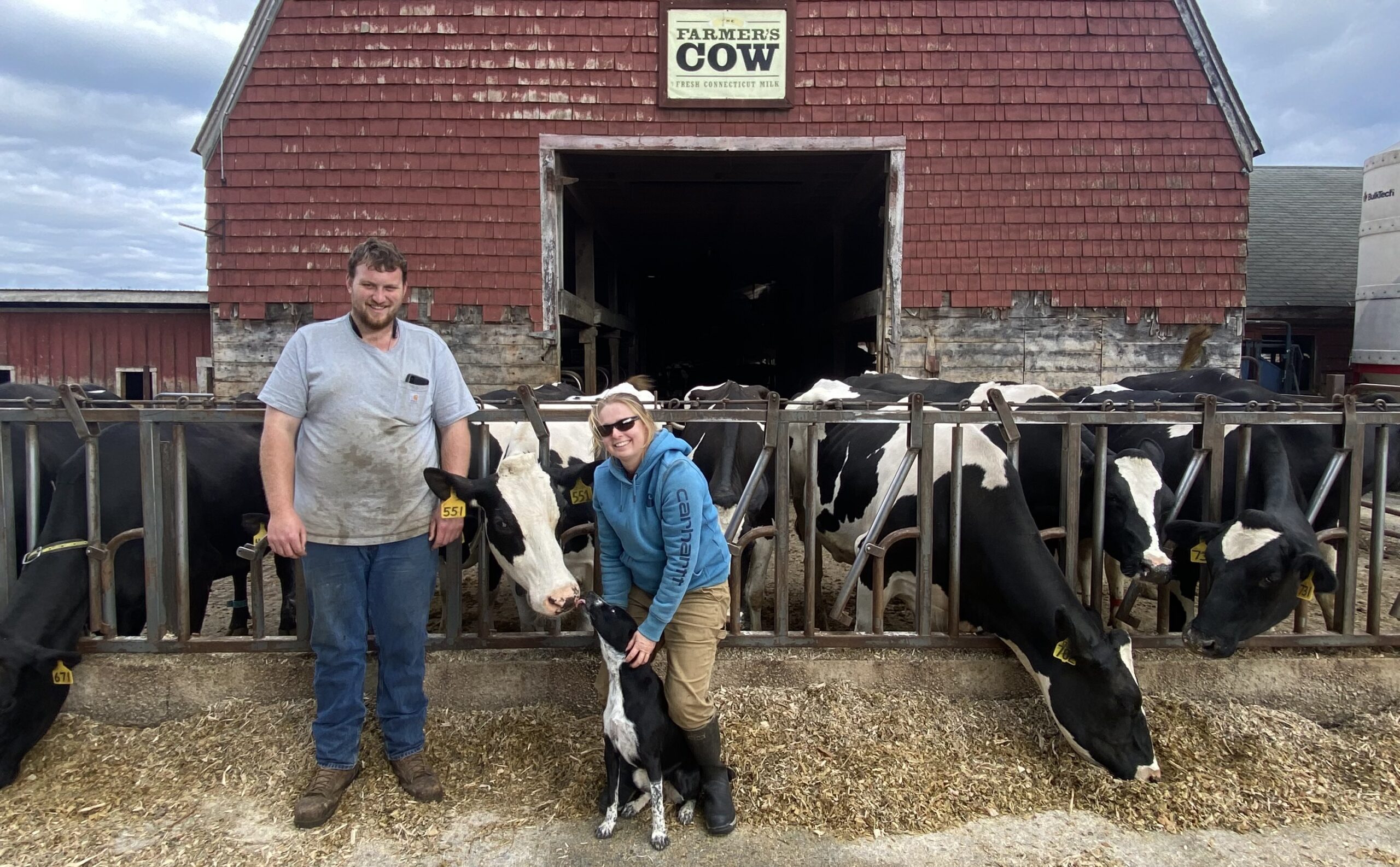
Nestled in the quiet, rural northeastern corner of Thompson, Fort Hill Farms shows how dairy farmers can thrive by blending tradition, innovation, and conservation. As one of just 87 dairy farms left in the state, this fourth-generation family farm remains a pillar of the community while adapting for the future.
Today, Fort Hill Farms is led by Kies Orr, who took over management from her parents. Her leadership earned her recognition as the state’s 2022 Outstanding Young Farmer — a testament to her forward-thinking leadership and commitment to sustainable agriculture. Kies and her husband Jared’s innovative approach won them regional recognition this year when they were awarded the 2025 New England Green Pastures award for Connecticut.
“Farmland protection gives us the security to diversity and keep farming here long-term.” – Kies Orr.
Since 2018, the Orr family has partnered with the Department of Agriculture’s Farmland Preservation Program and the Connecticut Farmland Trust to permanently protect seven separate parcels of land.
Their conservation agreements conserve prime soils and provide the financial stability needed for reinvestment. Kies reflects, “Having our land protected gives us the security to diversify. We can invest in renewable energy that works for the farm and its soils, reduces costs, and helps keep us farming here long-term.”
“Our family looks at farming as more than a job — it’s a way of life and something we are passionate about,” Kies explains. “We know that the community needs to experience agriculture to understand and value it, and we are happy to help make that possible.”
Dairy remains at the core of the operation — with over 400 cows, including 200 actively milking — while agritourism brings the broader public onto the farm. Kristin Orr, Kies’ mother, focuses on the agritourism side of the business. The farm is a community destination with lavender, gardens, and a nature walk. Fall is a special time on the farm with intricate corn mazes and pumpkin festivals — creating meaningful connections between rural agriculture and the local community.
One significant innovation has been the installation of an anaerobic digester through a partnership with AgGrid Energy. Since 2021, the digester has converted manure and food waste into renewable electricity — powering the farm, lowering emissions, and contributing to the local grid. Plus, the nutrient-rich by-product of anaerobic digestion enriches the soil and helps protect water quality.
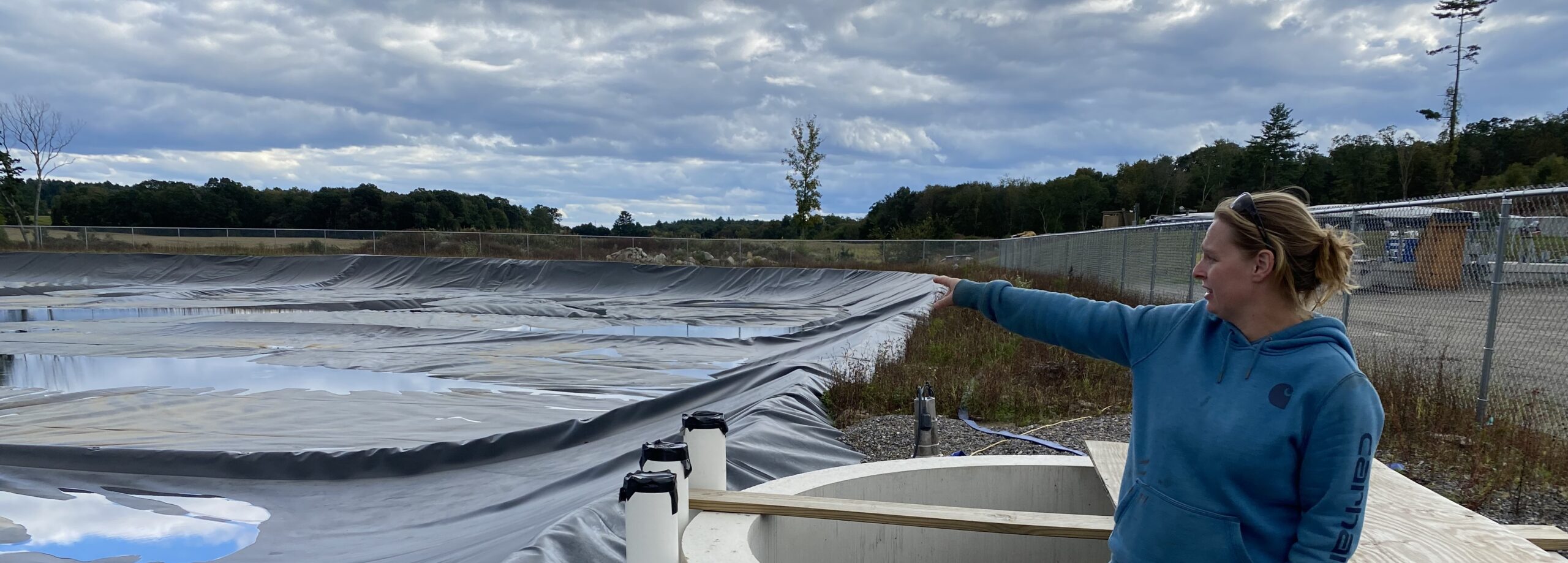
The farm has also built a new dairy barn featuring robotic milking machines, which boost efficiency and animal welfare. Conservation tillage, cover cropping, and nutrient recycling round out their efforts to maintain soil health and long-term productivity.
Fort Hill Farms exemplifies how dairy farmers — especially leaders like Kies Orr — can leverage farmland protection as a springboard for innovation, resilience, and community vitality.