

News
October 16, 2020
Love of the Land, Hope for the Future
Two Litchfield County Farms Preserved
Over a busy and exciting 48 hours this summer, Connecticut Farmland Trust (CFT) and its federal and state partners protected two prominent farms in southern Litchfield County.
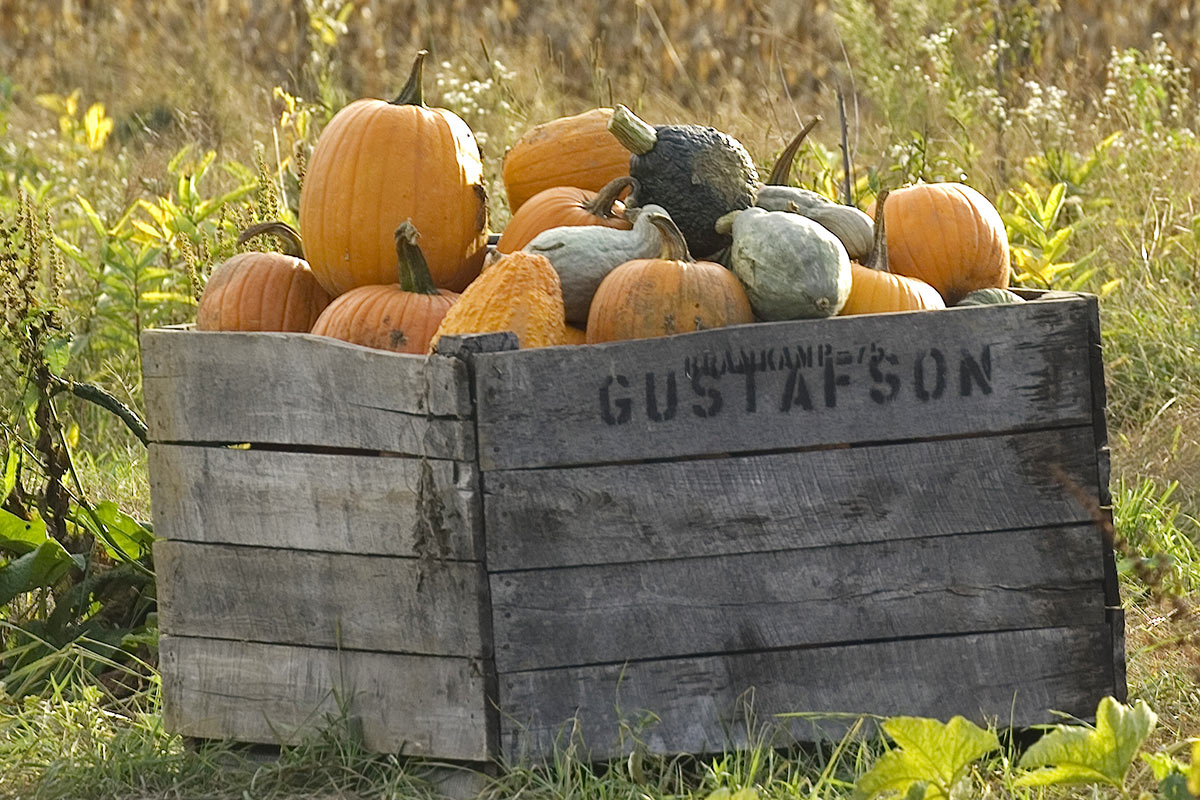
Gustafson Orchard and Farm, Watertown
For Gustafson Orchard and Farm of Watertown, preservation with CFT is the culmination of a decades-long process to safeguard the 301-acre family farm. Nearly 20 years ago, Alan Gustafson started meeting with the Housatonic Valley Association to discuss conservation options for the farm that his extended family has stewarded since 1907.
After Alan passed, his daughter Katie Barnosky was surprised to learn that her late father had been quietly gathering information on how to protect the land. She and her cousins knew that the previous generation had the right idea–they wanted to hold on to their family’s farm and begin thinking about preservation.
Katie, one of the co-owners of Gustafson Farm, and her cousins Frank Gustafson, III and Kristie Weidemier applied to the State of Connecticut’s Farmland Preservation Program to protect the 301-acre orchard and farm. CFT and the State jointly applied for funding from USDA-Natural Resources Conservation Service to conserve the farm. After three years of effort, the State and CFT secured the purchase of agricultural conservation easements on the farm.
Now, the land will always be available for the next generation of farmers. The large farm was preserved in three pieces to give the family flexibility when it comes time to sell or transfer it.
The farm’s scenic orchard was a popular fall destination for area families for many years and now the land is known for its bucolic hayfields and acres of grazing beef cattle. With the farm now preserved, the family is looking towards restoring the orchard to active production.
“We didn’t want to see [the land] developed because my family worked so hard to keep the farm,” said Katie. “We think that the neighbors and the town [of Watertown] will be happy to see the farm stay. We hope to provide for the town and make our family proud of us.”
Kuss Farms of Bethlehem and Woodbury
Neither Dick nor Peggy Ann Kuss come from farming backgrounds, but with lots of determination they made a mid-life career change from owning a school bus company to fulfilling their dream of becoming farmers.
When the couple initially made the leap, they kept the school bus company for some time to ensure that they would have additional income to buy more acreage. “From a young age, I knew that I wanted to farm,” shared Dick this summer. “My wife is from Ansonia, which is a pretty developed area. She loves gardening and we both like open spaces. I’d say that is why we became farmers. My wife and I are eighty now, and we have forty years on the farm.”
In those 40 years, they have built their farm into the third-largest hay operation in the state, selling high-quality hay to farms throughout the region. The farm also grows sweet corn, pumpkins, and vegetables for its roadside stand in Woodbury.
The Kusses are dedicated to securing their family farm one large parcel at a time. Dick and Peggy Ann have already preserved two parcels of their 450-acre property through the Connecticut Department of Agriculture’s Farmland Preservation Program.
When the Kuss family applied to the State to preserve this parcel, the State reached out to CFT to be a preservation partner. CFT and the State jointly secured matching funds from the USDA-Natural Resources Conservation Service to purchase an easement on the 61 acres.
“We want to keep farmland open like this,” said Dick of the 61 acres of farmland newly protected by CFT and its state and federal partners.
Elisabeth Moore, CFT’s Executive Director, said, “Thanks to the Kusses and their decision to protect their land now, another portion of a key Bethlehem farm will be available for the next generation of farmers and a beautiful part of that area of the State will remain open.”
The Kuss family will continue to raise hay and vegetables for the foreseeable future. When asked about what’s next for the farm, Dick said, “There are a lot of young people with an interest in farming, but they can’t farm because there is no land available for them. Maybe young people can use this farm in the future.”
With more of the farm safely preserved, it will be there for young farmers for generations to come.